





What is a KMS Wallet?
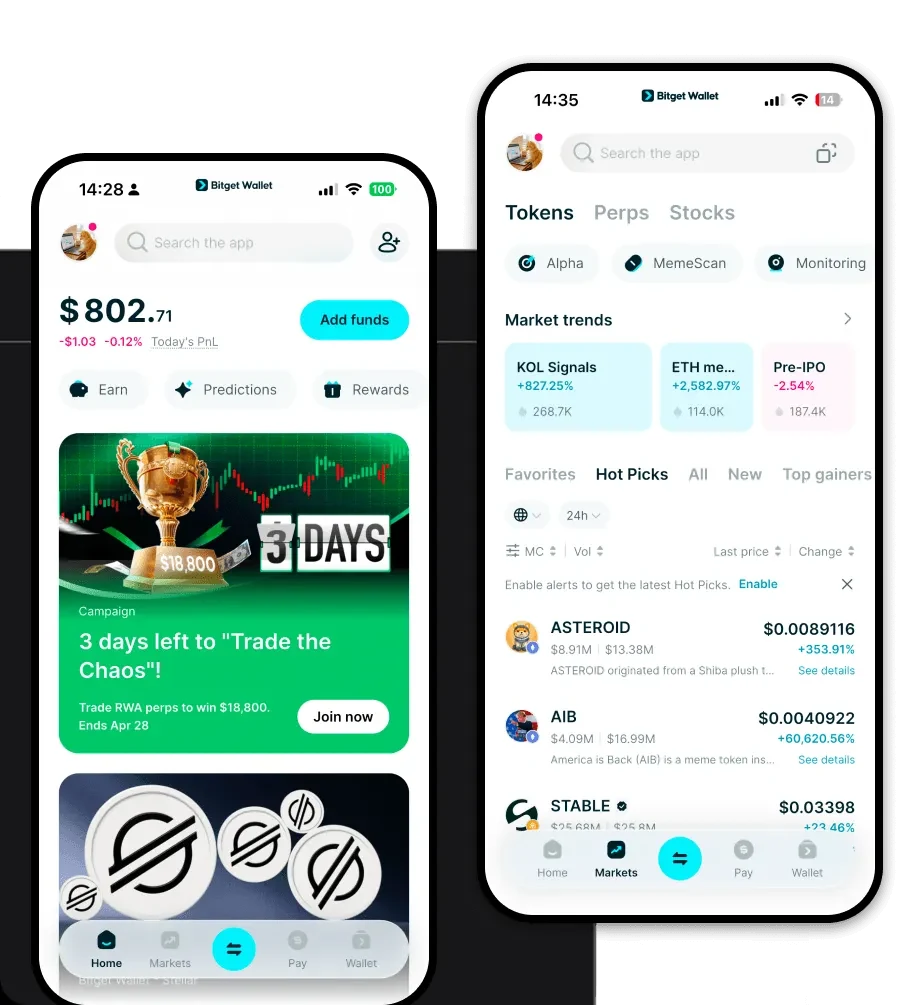
KMS (Key Management Service) is a critical infrastructure component in crypto wallets, designed to ensure secure key storage and transaction signing. Bitget Wallet provides a reliable and secure environment for managing such assets, trusted by 40 million users to explore Web3. As an asset residing on the EVM (Ethereum Virtual Machine) blockchain, KMS benefits from the robust security protocols and vast interoperability that characterize the Ethereum ecosystem. Understanding that KMS is an infrastructure-focused token, users need a wallet that not only stores the token but also integrates seamlessly with the complex smart contract interactions that define EVM-based decentralized applications.
Download Bitget KMS Wallet
To start managing your KMS assets effectively, you need a gateway that combines accessibility with high-level security. Bitget Wallet offers a comprehensive solution for both beginners and advanced users. By choosing to 'download Bitget Wallet', you gain access to a platform that supports over 130+ blockchains, ensuring that your KMS tokens are always accessible alongside your other multi-chain assets. Whether you are using an iOS device, an Android smartphone, or prefer the convenience of a browser extension for desktop interaction, the wallet ensures a consistent, non-custodial experience where you remain the sole owner of your private keys.
Why Choose Bitget KMS Wallet?
- Deep EVM Integration: Bitget Wallet is built with native support for the Ethereum Virtual Machine, ensuring that your KMS transactions are processed with optimal gas fee estimation and rapid confirmation times.
- Non-Custodial Security Architecture: Unlike centralized exchanges, Bitget Wallet utilizes a non-custodial model, giving you full control over your private keys and seed phrases, which is essential for infrastructure-grade assets like KMS.
- Hardware Wallet Compatibility: For maximum security, Bitget Wallet integrates seamlessly with leading hardware wallet brands, allowing you to manage your KMS holdings offline while enjoying the convenience of a mobile interface.
- Proactive Asset Protection: With a $300 million user protection fund, Bitget Wallet adds an extra layer of security, safeguarding your infrastructure assets against unforeseen threats in the DeFi space.
How to Create a KMS Wallet
Setting up your wallet to handle KMS is straightforward and designed to prioritize user security:
- Download and Install: Visit the official website or your device's app store to download Bitget Wallet.
- Create a New Wallet: Launch the app and select 'Create Wallet'. Ensure you back up your mnemonic phrase in a secure, offline location.
- Add KMS Token: Navigate to the 'Assets' page, use the search feature to find KMS, and toggle the switch to add it to your main dashboard.
- Verify EVM Network: Ensure your wallet is set to the correct EVM network (e.g., Ethereum or BNB Chain) where your KMS tokens reside.
- Secure Your Access: Enable biometric authentication (FaceID or Fingerprint) and set a transaction password to ensure that every outbound transfer requires your explicit approval.
What Can You Do With a KMS Wallet?
Managing KMS goes beyond simple storage; it involves active participation in the Web3 infrastructure ecosystem. Here is how you can utilize your Bitget Wallet:
- Secure Asset Storage: You can utilize the wallet's cold-storage-like security features to keep your KMS tokens safe from unauthorized access.
- Transaction Signing: Use the wallet to authorize smart contract interactions, ensuring that every time you interact with a protocol, your KMS keys remain encrypted and secure.
- Private Key Encryption: Leverage the wallet's advanced encryption standards to protect your private keys from being exposed to malicious browser extensions or phishing sites.
- Web3 dApp Interaction: Connect your wallet to various decentralized finance platforms to participate in governance or utility functions related to the KMS ecosystem.
- Cross-Chain Asset Management: Utilize the built-in swap and bridge features to move your assets across different chains, ensuring your KMS holdings remain liquid and versatile.
How KMS Wallets Are Different from Other Crypto Wallets
Managing an infrastructure token like KMS requires a wallet that understands the nuances of the EVM ecosystem. Unlike UTXO-based wallets (like those for Bitcoin), which focus on unspent transaction outputs, a KMS wallet on the EVM utilizes an account-based model. This means your wallet tracks a balance and a nonce, allowing for complex smart contract execution. Furthermore, while some wallets prioritize simplicity, a KMS-ready wallet like Bitget emphasizes gas fee optimization, ensuring you don't overpay for network congestion when executing transaction signing. Because KMS is tied to infrastructure, the wallet's ability to handle high-frequency interactions and provide clear gas estimation sets it apart from basic custodial wallets that lack the necessary DeFi integration tools.
