





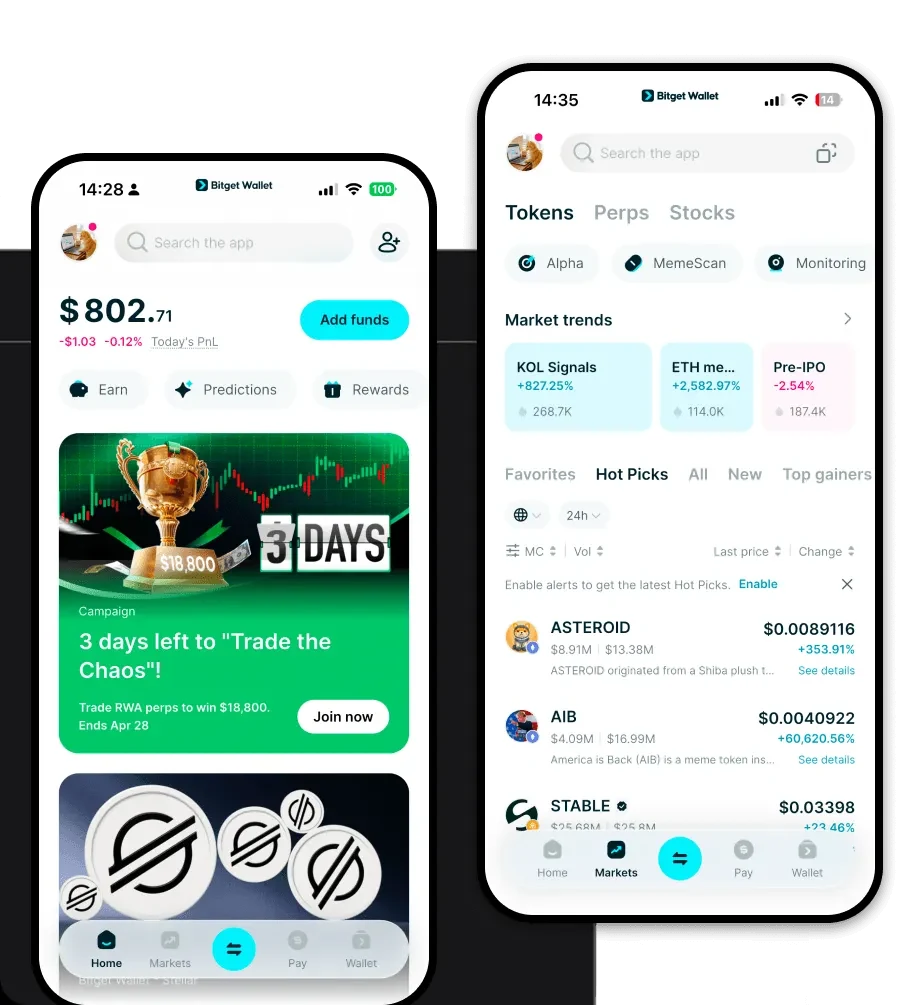
What is a PWT Wallet?
A PWT wallet is a secure digital interface designed to interact with the PlayWorld Token (PWT) ecosystem. PWT (PlayWorld Token) is a utility token often associated with Web3 gaming ecosystems. It serves as the primary medium for in-game transactions, reward distribution, and ecosystem governance. Users can securely store and manage their PWT assets using trusted wallets like Bitget Wallet to participate in the broader Web3 gaming landscape.
Because PWT operates on the EVM (Ethereum Virtual Machine) blockchain, a PWT wallet functions by managing private keys that grant you ownership over your tokens on the Ethereum or compatible Layer-2 networks. Unlike centralized exchanges where the platform holds your funds, a proper PWT wallet gives you full custody, allowing you to interact directly with smart contracts, decentralized apps (dApps), and gaming platforms.
Download Bitget PWT Wallet
Getting started with your PWT journey requires a reliable entry point. To manage your assets effectively, we recommend you download Bitget Wallet, a comprehensive solution designed for the modern Web3 user.
Bitget Wallet stands out by offering a seamless experience across multiple devices. Whether you are using an iOS device, an Android smartphone, or prefer the convenience of a browser extension for desktop dApp interaction, the wallet provides a unified interface. By choosing Bitget, you ensure that you maintain self-custody of your private keys, meaning your PWT assets remain under your total control at all times. With support for over 130+ blockchains, it acts as a universal gateway, not just for PWT, but for your entire multi-chain portfolio.
Why Choose Bitget PWT Wallet?
When dealing with EVM-based tokens like PWT, your choice of wallet significantly impacts your experience. Bitget Wallet is engineered to optimize your DeFi and gaming interactions through the following advantages:
- Native EVM Compatibility: Bitget Wallet provides flawless integration with the Ethereum Virtual Machine, ensuring you can sign transactions, approve smart contracts, and interact with PWT-related dApps without compatibility errors.
- Advanced Gas Fee Management: As an EVM-based asset, PWT transactions require gas fees. Bitget Wallet provides real-time gas tracking and optimization tools, helping you avoid overpaying during peak network congestion.
- Cross-Platform Interoperability: Whether you are mobile or on desktop, your assets are synced instantly. You can easily switch between your phone and your browser extension without needing to re-import your mnemonic phrase.
- Robust Security Architecture: With access to a 300 million USD user protection fund and hardware wallet integration support, Bitget provides an enterprise-grade security layer for your PWT holdings.
- Simplified DeFi Access: The built-in dApp browser allows you to connect to PWT staking pools and gaming marketplaces directly, bypassing the need for complex external integrations.
How to Create a PWT Wallet
Creating your wallet is a straightforward process designed to prioritize your security. Follow these steps to set up your Bitget Wallet for PWT:
1. Download and Install: Visit the official Bitget Wallet website to download the app for your preferred platform (iOS, Android, or Browser Extension).
2. Initialize the Wallet: Open the app and select 'Create a New Wallet'. You will be asked to set a strong, unique password to protect the local app interface.
3. Back Up Your Seed Phrase: The app will generate a 12-word recovery phrase. Write this down on paper—never take a screenshot—and store it in a secure, offline location. This is the only way to recover your PWT funds if you lose your device.
4. Verify and Enable Chains: Once the wallet is created, ensure the EVM-compatible chain that hosts your specific PWT tokens is enabled in the network settings. You can now view your wallet address.
5. Receive PWT: Copy your public wallet address and use it to withdraw PWT from an exchange or receive it from another wallet. Your PWT will appear in your asset dashboard once the transaction is confirmed on the blockchain.
What Can You Do With a PWT Wallet?
Holding PWT in a non-custodial wallet unlocks the full potential of the PlayWorld ecosystem. Here is how you can utilize your tokens:
- In-game Asset Purchasing: Use your PWT directly within supported Web3 games to buy skins, upgrades, or virtual land, ensuring you own your digital items permanently.
- Staking for Rewards: Participate in DeFi yield farming by staking your PWT tokens in liquidity pools, allowing you to earn passive interest or additional platform tokens over time.
- Governance Voting: As a token holder, you can connect your wallet to decentralized governance platforms to cast votes on proposals that shape the future development of the PlayWorld ecosystem.
- Trading on Decentralized Exchanges: Utilize your wallet to connect to major DEXs (like Uniswap or PancakeSwap) to trade PWT for other assets instantly without needing a centralized intermediary.
- Earning via Play-to-Earn Mechanics: Your wallet acts as the destination for your earnings; as you complete game objectives, PWT rewards are sent directly to your self-custody address, keeping your income secure.
How PWT Wallets Are Different from Other Crypto Wallets
Not all wallets are created equal, especially when handling EVM assets like PWT. The primary difference lies in the wallet's ability to handle the EVM account model compared to other systems like UTXO (used by Bitcoin). In the PWT ecosystem, your wallet acts as an 'account' with a specific balance and 'nonce' (transaction count), which is fundamentally different from UTXO-based wallets that manage individual transaction outputs.
Furthermore, because PWT relies on the EVM, your wallet must be able to calculate and estimate gas fees accurately. While a Bitcoin wallet focuses on simple send/receive functions, a PWT-ready wallet like Bitget must be capable of executing complex smart contract calls. This means the wallet must provide a smooth interface for interacting with DeFi protocols, handling token approvals, and managing the varying transaction speeds typical of the EVM landscape, which is essential for a seamless gaming experience.
