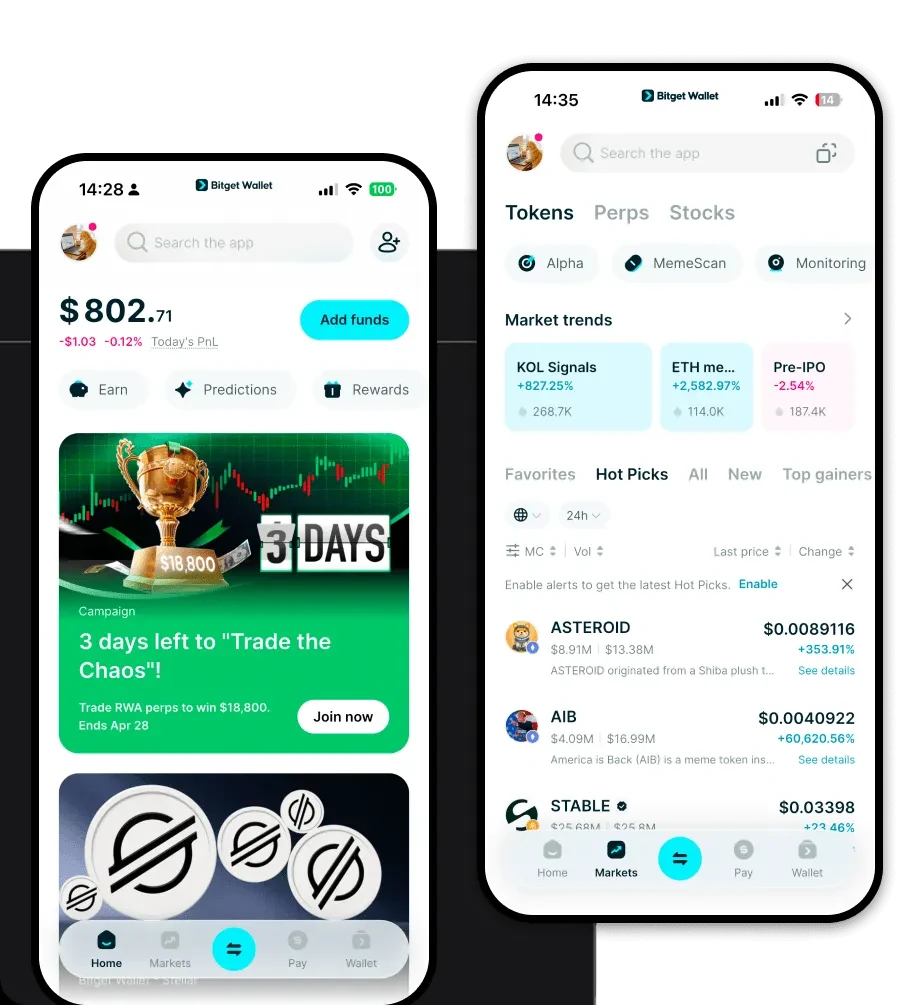
What is a UMD Wallet?
A UMD wallet is a specialized digital interface designed to allow users to securely store, manage, and interact with UMD tokens on the EVM blockchain. Since UMD operates within the Ethereum Virtual Machine ecosystem, a compatible wallet must support the ERC-20 standard and interact seamlessly with smart contracts. Are you looking for a reliable and secure crypto wallet for your UMD? Bitget Wallet will be your best choice. Trusted by 40 million users, you can freely explore Web3 on Bitget Wallet. Start your journey now!
Download Bitget UMD Wallet
Getting started with your UMD management is simple and secure. You can easily download Bitget Wallet across multiple platforms, including iOS, Android, and browser extensions. By choosing Bitget, you are opting for a non-custodial solution where you hold your private keys, ensuring you maintain full control over your assets. The wallet is designed to cater to both beginners and advanced users, offering a streamlined interface that supports over 130 public chains and millions of tokens, making it the perfect hub for your UMD operations.
Why Choose Bitget UMD Wallet?
When dealing with DeFi assets like UMD on an EVM chain, your choice of wallet directly impacts your security and efficiency. Bitget Wallet stands out for several technical reasons:
- EVM Compatibility: Built to natively support the EVM ecosystem, ensuring smooth interaction with all Ethereum-based dApps and protocols without configuration hurdles.
- Cross-Chain Interoperability: Seamlessly move your assets across different networks using integrated bridges, allowing you to optimize your UMD usage wherever liquidity is deepest.
- Decentralized Liquidity Provision: Access deep liquidity pools directly through the wallet interface, enabling you to participate in DeFi markets without navigating complex external sites.
- Smart Contract Security: Benefit from advanced security monitoring and audit integrations that protect your UMD transactions from malicious smart contract interactions.
How to Create a UMD Wallet
- Install the App: Visit the official Bitget Wallet website and download the application for your specific device (iOS, Android, or Chrome Extension).
- Initialize Wallet: Open the app and select 'Create a New Wallet' to generate a new set of addresses.
- Backup Seed Phrase: Securely write down your 12-word recovery phrase. Never share this with anyone, as it is the only way to recover your UMD wallet.
- Verify Phrase: Confirm your recovery phrase in the app to ensure you have recorded it correctly.
- Add UMD: Once your wallet is set up, you can import or search for the UMD token contract address to view your balance and begin transacting.
What Can You Do With a UMD Wallet?
With Bitget Wallet, you can fully leverage the DeFi capabilities of your UMD tokens:
- Staking: Lock your UMD tokens into verified protocols to earn passive rewards and contribute to network security.
- Yield Farming: Deposit your UMD into liquidity pools to earn high-yield returns based on the protocol's farming incentives.
- Liquidity Mining: Provide liquidity to decentralized exchanges, enabling others to trade UMD while you earn a share of the transaction fees.
- Token Swapping: Use the built-in aggregator to exchange UMD for other assets at the best market rates with minimal slippage.
- Governance Voting: Participate in the decentralized decision-making process by using your UMD to vote on protocol upgrades and community proposals.
How UMD Wallets Are Different from Other Crypto Wallets
Unlike wallets designed for simple storage, a UMD wallet optimized for DeFi on the EVM chain requires specific architectural advantages. While Bitcoin wallets focus on UTXO (Unspent Transaction Output) security and long-term cold storage, a UMD wallet is built for the account-based model used by EVM chains. This means it must manage gas fees efficiently to execute smart contracts in real-time. Bitget Wallet optimizes these interactions by providing real-time gas fee estimates and transaction acceleration, ensuring that your UMD transactions are processed quickly even during periods of high network congestion, unlike basic wallets that often leave users stuck with high fees or failed transactions.