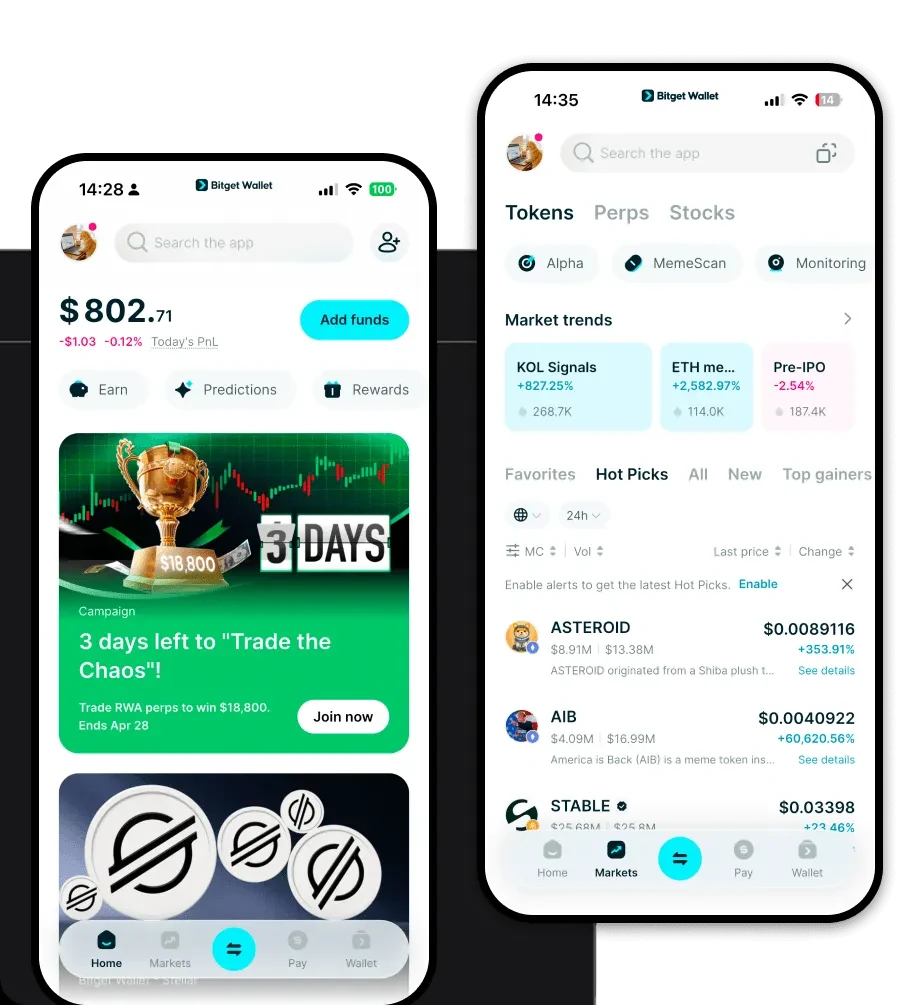
What is an HPW Wallet?
An HPW wallet is a digital interface that allows you to interact with the HPW token, which operates on the EVM (Ethereum Virtual Machine) blockchain. Because HPW is built on an EVM-compatible chain, it requires a wallet that supports standard account-based models, enabling seamless interaction with decentralized applications and smart contracts. HPW is a digital asset that can be securely stored and managed using Bitget Wallet. Bitget Wallet provides a reliable platform for users to explore Web3, trusted by 40 million users worldwide. By using a specialized wallet, you ensure that your private keys remain under your control while you engage with the broader ecosystem.
Download Bitget HPW Wallet
Getting started with your digital assets requires a secure and versatile gateway. To manage your tokens effectively, you can download Bitget Wallet, which is designed to serve as a comprehensive hub for all your crypto needs. Whether you are on the move or working from a desktop, Bitget Wallet offers a unified experience through its mobile apps for iOS and Android, as well as a robust browser extension. The wallet prioritizes user sovereignty, ensuring true private key self-custody so you remain the sole owner of your assets. With native support for over 130 blockchains, it acts as a universal tool for multi-chain management, allowing you to switch between networks effortlessly while keeping your HPW assets organized in one place.
Why Choose Bitget HPW Wallet?
Selecting the right wallet is crucial for your DeFi journey. Bitget Wallet stands out for HPW users by offering a seamless experience tailored to the EVM ecosystem:
- EVM Compatibility: Designed specifically for the Ethereum Virtual Machine, ensuring full support for standard smart contract interactions and dApp connectivity.
- High Liquidity Access: Aggregates liquidity from hundreds of decentralized exchanges, ensuring you get the best rates when trading HPW.
- Secure Asset Management: Backed by a $300 million User Protection Fund, providing an extra layer of security for your holdings.
- Cross-Platform Interoperability: Easily bridge your assets across multiple chains with integrated bridging technology, removing the friction of moving tokens between different networks.
How to Create an HPW Wallet
Setting up your wallet is a straightforward process that grants you immediate access to the DeFi ecosystem. Follow these steps:
- Download and Install: Visit the official Bitget Wallet website and download the app for your preferred device (iOS, Android, or Browser Extension).
- Create a New Wallet: Open the app and select 'Create a Wallet.' You will be prompted to set a strong password to protect the application locally.
- Backup Your Seed Phrase: The app will generate a 12-word recovery phrase. Write this down on paper and store it in a secure, offline location; never share this with anyone.
- Verify Your Phrase: Confirm the recovery phrase in the app to ensure you have recorded it correctly.
- Add HPW to Your Dashboard: Once your wallet is set up, search for 'HPW' in the token list and toggle it on to view your balance and transaction history.
What Can You Do With an HPW Wallet?
An HPW wallet is more than just a storage device; it is a gateway to active participation in the DeFi sector. With Bitget Wallet, you can maximize the utility of your assets:
- Trading: Execute high-speed trades for HPW directly within the wallet interface by tapping into aggregated decentralized exchange liquidity.
- Staking: Lock your HPW tokens into verified smart contracts via the wallet's dApp browser to earn yields or participate in network governance.
- Token Swaps: Utilize the built-in swap feature to instantly exchange HPW for other assets across different chains without leaving your wallet.
- Portfolio Management: Monitor your total asset value, transaction history, and price trends in real-time with an intuitive dashboard designed for clarity.
How HPW Wallets Are Different from Other Crypto Wallets
Not all wallets are built the same, and the differences are particularly noticeable when dealing with EVM-based tokens like HPW. Unlike wallets designed for UTXO-based chains (like Bitcoin), which focus on individual transaction inputs and outputs, an HPW wallet uses an account-based model. This model is essential for the EVM ecosystem, as it tracks the current state of balances and contract code, making it highly efficient for complex DeFi interactions. Furthermore, while some wallets struggle with gas fee estimations, Bitget Wallet optimizes for the EVM environment, providing real-time gas fee adjustments to ensure your transactions are processed quickly and cost-effectively, even during periods of high network congestion.