What is a $OBOL Wallet?
A $OBOL wallet is a digital interface designed to interact with the Obol Network, a specialized protocol built on the Ethereum Virtual Machine (EVM) ecosystem. Obol Network ($OBOL) is a protocol focused on Distributed Validator Technology (DVT), designed to enable trust-minimized, decentralized staking infrastructure. It allows for multi-operator Ethereum validators, enhancing network resilience and reducing the risk of slashing while promoting broader participation in Ethereum staking. Because Obol functions within the EVM environment, a $OBOL wallet serves as your personal portal to manage assets, participate in governance, and engage with decentralized validator clusters.
Download Bitget $OBOL Wallet
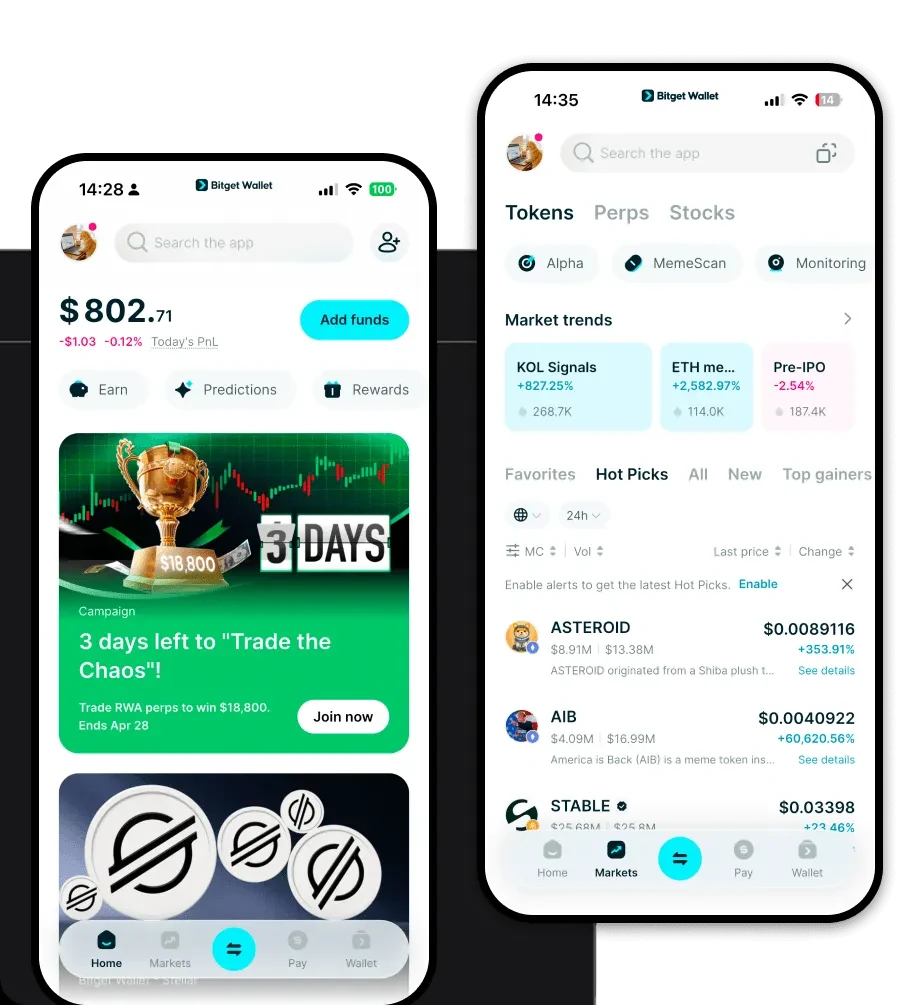
To fully experience the potential of the Obol Network, you need a robust, user-centric interface that prioritizes both security and accessibility. Bitget Wallet provides an all-in-one platform that supports over 130 blockchains, ensuring that your $OBOL assets are always accessible, regardless of the specific EVM-compatible chain you are utilizing. Unlike centralized exchanges, Bitget Wallet offers true self-custody, meaning you are the sole owner of your private keys and recovery phrases.
The application is designed for versatility, offering native support across iOS, Android, and browser extensions to ensure you can monitor your staking infrastructure on the go or from your desktop. If you are ready to secure your digital assets and participate in the next wave of decentralized finance, you can download Bitget Wallet and begin your journey into the Obol ecosystem today.
Why Choose Bitget $OBOL Wallet?
When selecting the best wallet for $OBOL, the primary considerations are security, compatibility, and ecosystem integration. Bitget Wallet stands out for several key reasons:
- MetaMask Compatibility: As an EVM-native wallet, Bitget ensures seamless interaction with existing DeFi protocols and dApps, making it easy to bridge your $OBOL assets.
- Advanced Gas Management: The wallet provides real-time insights into network congestion, allowing you to optimize transaction fees on the Ethereum network.
- Comprehensive DeFi Ecosystem: Access a wide array of decentralized applications directly through the built-in DApp browser, specifically curated for staking and liquidity management.
- Institutional-Grade Security: With a $300 million protection fund and robust encryption, Bitget offers peace of mind for users participating in high-value staking activities.
How to Create a $OBOL Wallet
Setting up your wallet is a straightforward process designed to get you ready for staking in minutes:
Step 1: Visit the official website or app store to download the Bitget Wallet application.
Step 2: Launch the app and select 'Create a New Wallet.' Ensure you are in a private environment.
Step 3: Carefully write down your 12-to-24-word recovery phrase on a physical piece of paper and store it in a secure, offline location. Never share this with anyone.
Step 4: Verify your recovery phrase as prompted by the application to confirm your backup is correct.
Step 5: Once the setup is complete, navigate to the asset list, add the network (Ethereum/EVM), and your $OBOL wallet address is ready to receive tokens.
What Can You Do With a $OBOL Wallet?
Owning a $OBOL wallet opens the door to a variety of sophisticated DeFi activities within the Obol Network:
- Running decentralized validators: Utilize your $OBOL to participate in the operational side of the network, ensuring the consensus layer remains robust and distributed.
- Staking infrastructure participation: Engage directly with the Obol protocol to contribute to validator clusters, moving beyond simple token holding.
- Governance voting: Use your wallet to participate in on-chain governance, helping to shape the future direction of the Obol Network and its DVT standards.
- Protocol security maintenance: By participating in the network, you contribute to the overall resilience of the staking infrastructure, effectively acting as a guardian of the protocol's integrity.
- Staking yield optimization: Strategically manage your assets to maximize staking rewards through the efficient participation in DVT-powered validator clusters.
How $OBOL Wallets Are Different from Other Crypto Wallets
Unlike Bitcoin-focused wallets that rely on the UTXO model for simple peer-to-peer transfers, a $OBOL wallet operates on the EVM account-based model. This architectural difference is critical for DeFi. While UTXO wallets are built for transaction simplicity and security, EVM wallets like the Bitget $OBOL wallet are built for complexity and smart contract interaction. They allow for the execution of sophisticated staking logic, DVT management, and interaction with liquidity pools that non-EVM wallets simply cannot handle. Furthermore, because Obol is deeply integrated into the Ethereum ecosystem, your wallet acts as a programmable tool rather than just a storage container for value.